- Your cart is empty
- Continue Shopping

What are the Best AEDs for Schools and Athletics?
With sudden cardiac arrests (SCA) increasingly making headlines, concerned parents are asking more questions about their school’s automated external defibrillator program and emergency response capabilities.
School districts nationwide have made significant investments in AED equipment and staff training to respond effectively to cardiac emergencies on campus. Most states now mandate AED programs in schools, recognizing the critical importance of rapid response capabilities.
At AED Brands, we work with educational institutions of all sizes across the country every day. Drawing on 15 years of experience helping schools implement effective AED programs, we’re sharing our expert recommendations and insights.
Why AEDs Are Essential in School Settings
An automated external defibrillator (AED) can mean the difference between life and death during a cardiac emergency. Sudden cardiac arrest strikes without warning and represents a leading cause of death, particularly among individuals with underlying heart conditions that may be undiagnosed in young people.
When cardiac arrest occurs, the heart stops pumping blood effectively and the victim loses consciousness. Without immediate intervention, brain damage begins within minutes and death can follow quickly.
AEDs deliver a controlled electrical shock through the chest wall to restore normal heart rhythm. Modern devices are specifically designed for use by non-medical personnel and provide clear step-by-step audio and visual guidance throughout the rescue process. Understanding proper AED pad placement is part of this intuitive process.
AED Inspection and Maintenance Requirements
Regular AED inspections should occur monthly at minimum, with maintenance following manufacturer specifications. Monthly checks should verify battery charge levels, pad expiration dates, and overall device functionality. Most modern AEDs perform automatic self-tests daily, weekly, and monthly to confirm readiness.
Establish a clear maintenance schedule that includes:
- Checking battery status and replacement timelines
- Monitoring electrode pad expiration dates
- Inspecting device components for damage or wear
- Ensuring rescue kits remain fully stocked with necessary supplies
- Documenting all inspections in a maintenance log
Who Needs AED Training in Schools?
Comprehensive AED training should extend to all school personnel, including teachers, administrators, coaches, athletic trainers, security staff, and facilities personnel. The more trained responders available throughout the building, the faster the response time during an emergency.
Consider implementing AED education in student health curricula as well. Teaching students about cardiac emergencies and Basic Life Support (BLS) principles prepares the next generation of potential responders and builds awareness of heart health from an early age.
Training programs should cover the chain of survival concept, emphasizing that early defibrillation dramatically improves survival rates for cardiac arrest victims.
State Regulations and Compliance Requirements
AED regulations vary significantly by state, with different requirements for device placement, staff training, emergency protocols, and reporting. Contact your state health department or education agency to understand specific compliance obligations for your district.
Many states require schools to:
- Maintain a specific number of AEDs based on building size
- Ensure trained personnel are present during school activities
- Develop written emergency action plans
- Register AEDs with local emergency medical services
- Provide regular training updates for staff
Determining How Many AEDs Your School Needs
The appropriate number of AEDs depends on multiple factors including total square footage, student enrollment, building layout, number of floors, and locations of high-risk areas like gymnasiums and athletic facilities. The goal is ensuring an AED can reach any location in the building within 3-5 minutes.
Use our AED Calculator Tool to estimate the recommended number of devices for your facility based on these key factors.
Consider placing AEDs in:
- Main office or administrative areas
- Gymnasiums and athletic facilities
- Cafeterias and common areas
- Near athletic fields and outdoor facilities
- Upper floors of multi-story buildings
Strategic AED placement in highly visible, accessible locations ensures rapid deployment during emergencies.
Selecting the Right AED for Your School
When choosing an AED for educational settings, specific features directly impact the device’s effectiveness during high-stress emergencies. Focus on these critical capabilities:
Pediatric Capabilities: Schools serving younger children must have AEDs with pediatric functionality. Pediatric-capable devices either include separate pediatric electrode pads or feature a switch to adjust energy levels appropriately. This capability is essential for children under 8 years old or weighing less than 55 pounds, as they require lower energy doses than adults. Understanding when adult AED pads can be used on children is important for emergency preparedness.
Bilingual Functionality: Schools in communities with significant non-English speaking populations benefit tremendously from AEDs offering instructions in multiple languages. Clear, audible guidance in the responder’s preferred language eliminates confusion and speeds response time when seconds matter most.
Intuitive Operation: While staff training in BLS is valuable, emergency situations may require action from individuals with minimal experience. Select devices designed for straightforward operation with clear visual displays, voice prompts, and simple steps that anyone can follow under pressure. Look for devices that guide users through special considerations automatically.
Proven Reliability: Choose AEDs from FDA-approved manufacturers with established track records, including Philips, HeartSine, Physio-Control, Defibtech, ZOLL, and Cardiac Science. Quality devices should include:
- Comprehensive extended warranty coverage
- Automatic self-testing capabilities (daily, weekly, monthly) to verify constant readiness
- Long-lasting batteries and electrodes with clear expiration monitoring
- Durable construction suitable for school environments
- Real-time CPR feedback to guide rescuers (available on many models)
Consider pairing your AED with appropriate AED wall cabinets for visible, protected storage and AED training devices for ongoing staff education.
Building a Complete Emergency Response Program
An effective school AED program extends beyond simply purchasing devices. Develop comprehensive emergency action plans, conduct regular drills, maintain clear communication protocols with local EMS, and create a culture where all staff members understand their role in the emergency response chain.
Regular practice with CPR training manikins and AED trainers keeps skills sharp and builds confidence for real emergencies.
At AED Brands, we help schools develop complete cardiac emergency preparedness programs tailored to their specific needs, budget, and facility requirements. Our team provides ongoing support for device selection, staff training coordination, replacement pads, batteries, and compliance assistance to keep your program running smoothly.
Contact us today to discuss your school’s AED needs and learn how we can help protect your students, staff, and community.
Interested in purchasing AEDs or in need of a purchase order? Look no further – we’re here to assist! AED Brands proudly stands as the largest privately owned distributor in the United States and has helped countless customers just like you. Please note at this time shipping is available only in the United States.
Please take a moment to share some information about yourself and your specific requirements. Our team of AED experts will reach out to you shortly.
ZOLL AED 3
The ZOLL AED 3 is an excellent option for schools as it offers a combination of design, dependability, durability, and performance.
The AED 3 features a color touchscreen LCD display which makes it easy to use, even in an emergency situation. Additionally, the device has Real CPR Help® which provides real-time feedback on the quality of CPR being performed, which can help increase the chances of survival. The AED 3 is also WiFi-enabled, allowing for easy program management and cloud connection to the Defibrillator Dashboard™.
This feature allows for remote monitoring and RescueNet® Case Review™ which can help improve the quality of care. The device also has clinical event case push and UTC synchronization which ensure that the device is always up to date with the latest information and guidelines. Overall, the ZOLL AED 3 is a reliable and user-friendly option for schools looking to have an AED.
Request An AED Quote For Schools
Hot
LIFEPAK CR2
The LIFEPAK CR2 is a great option for schools because of its versatility and ease of use. The device is available in both semi-automatic and fully-automatic options, allowing users to choose the mode that best suits their needs.
Additionally, the device is available in single or dual-language options, making it accessible to a wider range of users. The LIFEPAK CR2 can also be connected via Wi-Fi or USB, which allows for easy data transfer and remote monitoring.
This feature can be helpful for schools in terms of keeping track of the device’s status, usage, and maintenance schedule. Furthermore, the device is durable and reliable, making it a great option for schools that need to have an AED on site. Overall, the LIFEPAK CR2 is a versatile and user-friendly option for schools looking to have an AED on
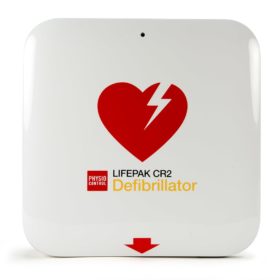
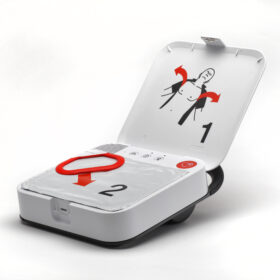
Physio-Control LIFEPAK CR2 AED
$2,256.00 – $2,681.00Price range: $2,256.00 through $2,681.00
Philips FRX
Weighing only 3.5 lbs, the Philips FRx is easy to carry and transport, making it ideal for schools.
The device also comes with an 8-year warranty, providing peace of mind and ensuring that the device will be available for use in case of an emergency. The device also comes with a semi-rigid carry case, which offers protection and makes it easy to transport.
The device also has “Quick Shock” capabilities, which allows for rapid defibrillation in the event of cardiac arrest. Additionally, the device offers CPR coaching during a rescue, which can help increase the chances of survival. The device also offers “On Demand” with the push of the iButton, which provides step-by-step rescue guidance to users, making it easy for even non-medical personnel to use.
Hot
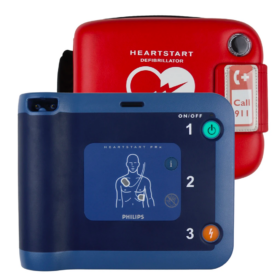
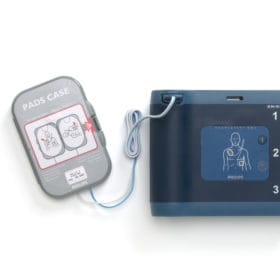
Philips HeartStart FRx AED with FREE Carry Case 861304
Rated 5.00 out of 5
(1)
$2,099.00 – $2,199.00Price range: $2,099.00 through $2,199.00
Share
AED Brands
Implementation Guide