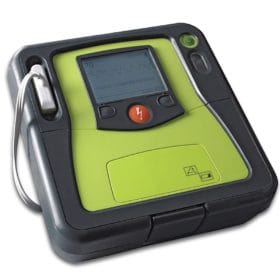
AED Defibrillator Glossary of Common Terms A - C
A technique to remove or render inactive problematic cardiac tissue.
Advanced Cardiac Life Support (ACLS)
Also known as ALS. A series of advanced treatments for cardiac arrest and other life threatening conditions. ACLS is provided to the victim by certified professionals such as doctors, nurses, and EMTs.
See automated external defibrillator
The number one source of equipment, supplies, and information for AED programs.
A set of precise rules programmed into a defibrillator to analyze heart rhythms and treat cardiac arrest.
A non-profit organization that establishes the standards in cardiac care.
An abnormality or irregularity in the heart rhythm.
Absence of a heart beat, also known as "flat line". A dire condition in which the heart hasno rhythm.
An abnormal, very fast and disorganized heart rate with chaotic electrical activity in the atria of the heart. Symptoms may include heart palpitations and a shortness of breath. Also known as A-fib. AF is a form of supraventricular tachycardia.
Rapid, organized atrial contractions that usually result in a heart rate of 250-350 beats per minute. AF is a form of supraventricular tachycardia.
A rapid heart rhythm resulting in 160-190 beats per minute. AT is a type of supraventricular tachycardia.
The upper chamber of each half of the heart.
Automated External Defibrillator (AED)
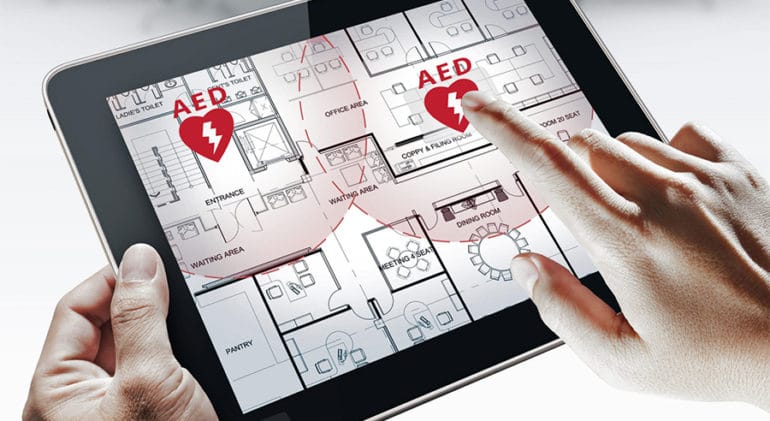
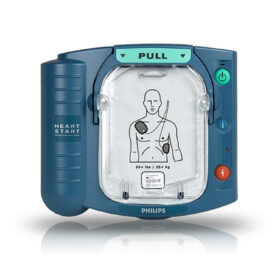
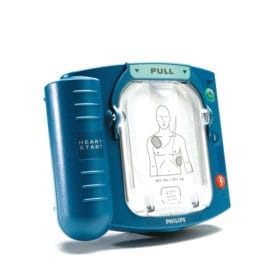
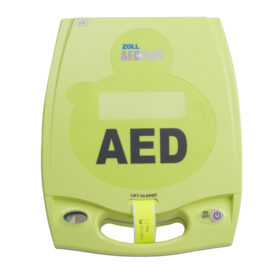
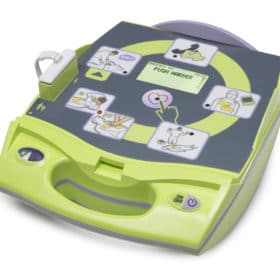
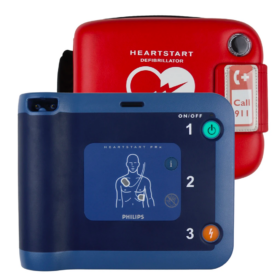
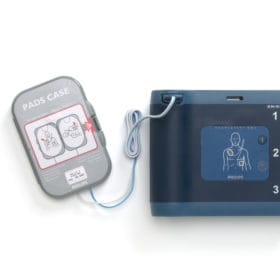
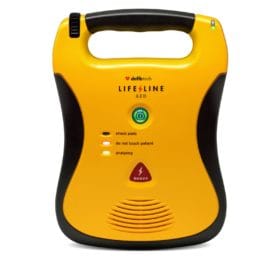
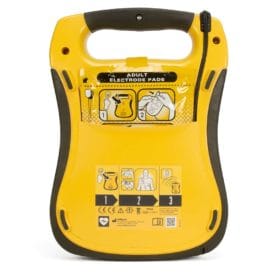
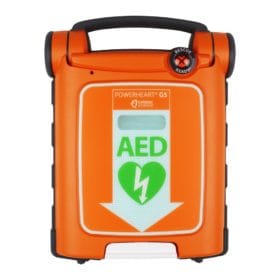
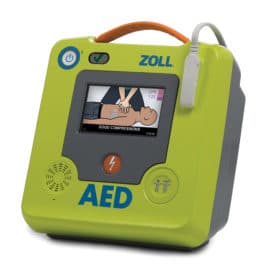
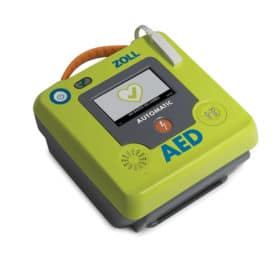
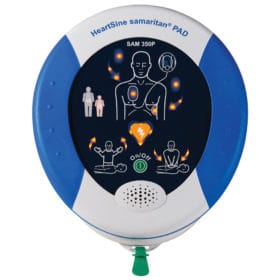
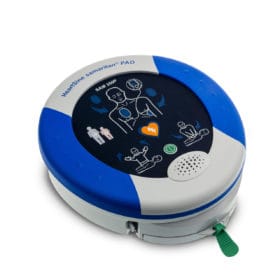
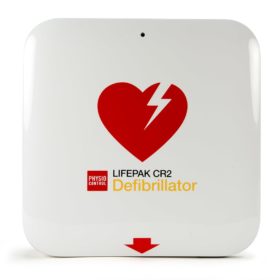
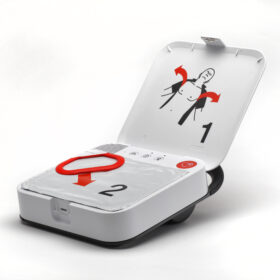
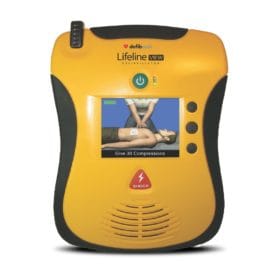
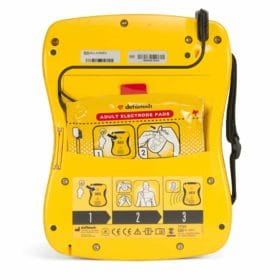
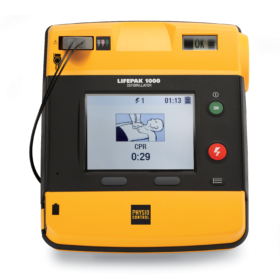
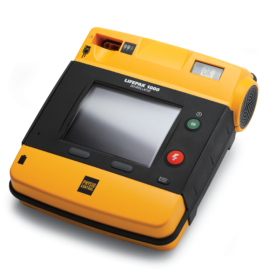
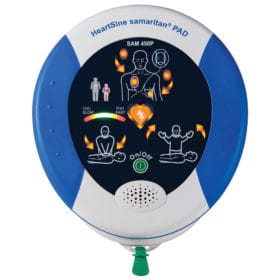
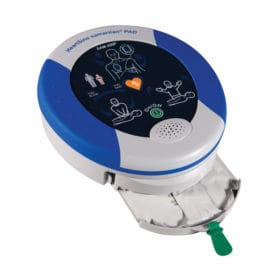
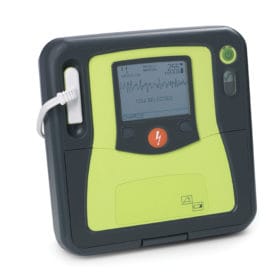
A life-saving device that treats sudden cardiac arrest. Once the AED pads are applied, the device analyzes the victim's heart rhythm. If it detects a rhythm that can be treated, it allows a shock to be delivered to the victim to regain a normal heart rhythm. AEDs have become common anywhere people gather.
Fundamental treatment provided to a victim to include CPR and AED use.
Current from a defibrillator is delivered two ways. Biphasic therapy was introduced in the 1990s and lowers the electrical threshold for successful defibrillation. Biphasic waveforms are much safer and more effective than the older monophasic technology. As such, it is the standard for all defibrillation today.
Slowness of the heart rate, usually less than 60 beats per minute. Bradycardia can be a serious problem if the heart doesn't blood to the body.
See sudden cardiac arrest.
Cardiopulmonary Resuscitation (CPR)
An emergency procedure treating a victim who is unconscious and unresponsive with no signs of circulation. A first responder using CPR will apply chest compressions and rescue breathes to force oxygenated blood to the vital organs.
A medical procedure by which a trained professional converts an abnormally fast heart rate to a normal rate using defibrillation.
A thin, flexible tube that is inserted into the heart through a peripheral blood vessel to provide therapy and/or diagnosis.
A four-step process for treating victims of sudden cardiac arrest (SCA). When implemented
early in a cardiac event, the chain of survival can improve chances of
survival dramatically. Developed by The American Heart Association in
1990, the Chain of Survival has become the standard of care for cardiac
victims. The four steps in the process are :
- Early Access - contacting 911
- Early CPR - administering CPR
- Early Defibrillation - apply an AED
- Early Advanced Care - Engaging professional responders.
A disruption of the heart rhythm caused by a sudden blunt blow to the chest. The chest is struck immediately over the heart at a precise moment in the heart rhythm, causing sudden cardiac arrest. Commotio cordis, also known as a concussion of the heart, occurs most commonly in boys participating in sports.
A birth defect of the heart
See cardiopulmonary resuscitation.